





Author: Vitasystem team · Technical review: Large-format production department
Updated: 2026-07-26
Start with the location, not the shape
A beachflag can mark an entrance, lead people to a stand or give several points of sale a consistent rhythm. First assess the ground, the available height, the footfall and the distance from which the flag needs to be seen. In a cramped interior an oversized format gets in the way, while on a wide avenue a small flag can easily disappear.
Also check the requirements of the venue or organiser. Flagpole height is often restricted, and free-standing elements must not narrow escape routes.
Different shapes change the way you present
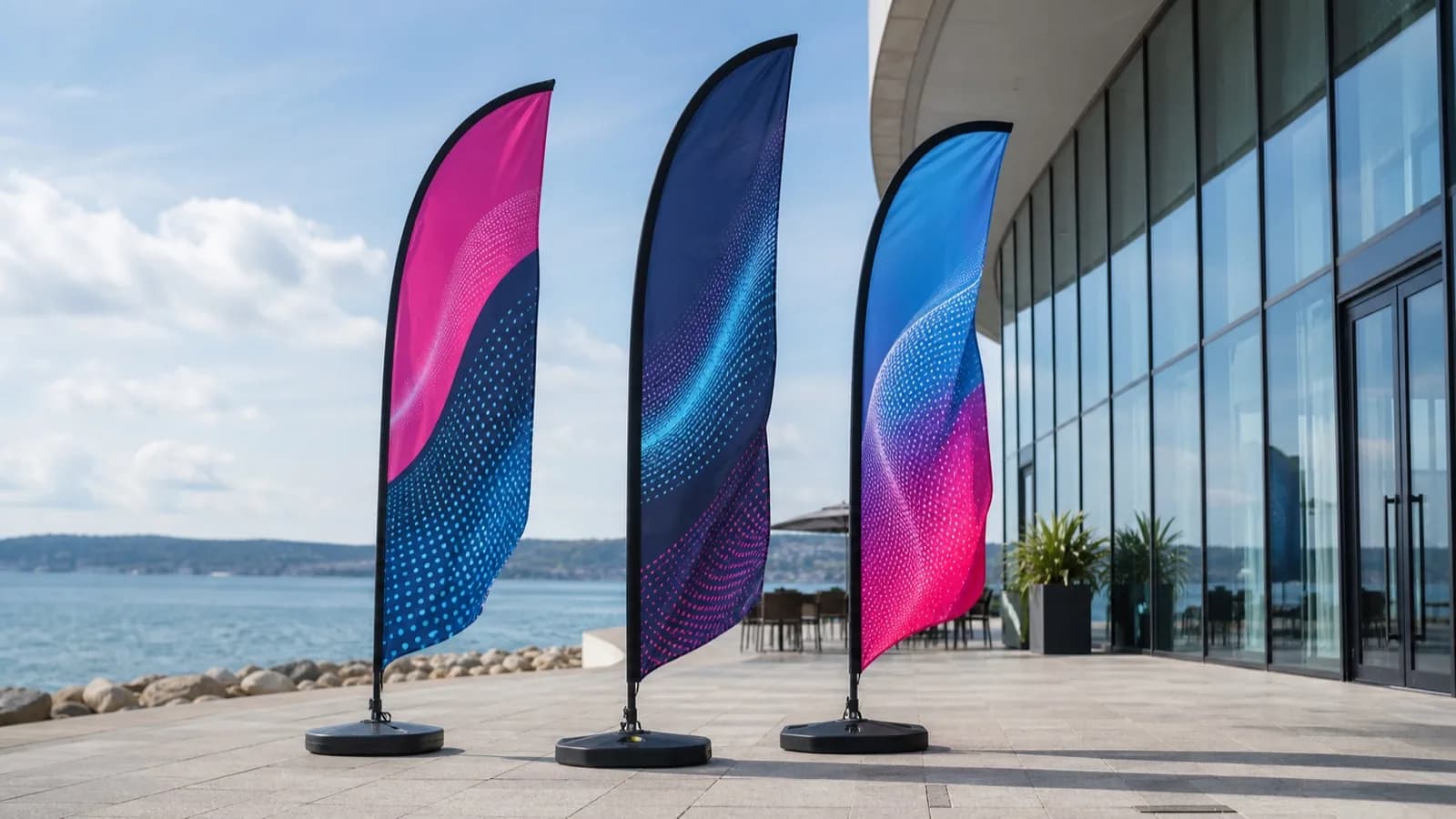
The feather shape creates a dynamic, slender line. The teardrop keeps the surface taut, and rectangular shapes give plenty of room for a vertical layout. Do not choose on the basis of an empty template alone: check how your logo and key message sit within that particular outline.
The artwork is seen on the move, often at an angle. Short messages, high contrast and recognisable brand elements work best. Move long addresses and detailed lists of benefits to other media.
How to choose the height
Small flags work well by counters, entrances and at short distances. Medium formats are the most versatile at events, while tall flagpoles provide visibility across large sites. Remember that the system dimensions include the flagpole and base, not just the printed fabric.
If you are setting up several flags, keep the spacing consistent and align them. This looks far more professional than individual displays placed at random.
The base must suit the ground
A cross base works well on level indoor surfaces, often combined with additional weight. A base plate provides a flat, stable footing on hard ground. A ground spike is used in suitable soil, and water-filled bases are a mobile solution for many outdoor events.
Always use components that are compatible with the flagpole in question and the manufacturer's instructions. Mixing random parts can impair the flag's rotation, damage the structure or reduce safety.
Single-sided or double-sided design?
On a lightweight single-sided flag, the artwork is usually visible from the reverse too, but as a mirror image. A double-sided construction keeps the message the right way round on both sides, but it is heavier and behaves differently in the wind. Base your decision on where the flag will be displayed and on the content of the design.
- Identify the directions visitors will approach from
- Match the base to the specific ground
- Limit the text to the key message
- Keep a safe distance from walkways
Flagpole and artwork specifications
On the product page, check the overall height of the set, the fabric dimensions, the number of flagpole sections, the spindle diameter and the list of compatible bases. It is also important whether the flagpole lets the flag rotate with the wind and whether separate covers for the artwork and hardware are included.
When ordering a replacement print, state the exact flagpole model. A similar height does not guarantee the same cut or sleeve. An up-to-date template limits stress on the fabric and stops important design elements from shifting.
The most common mistakes when buying and setting up
A common mistake is choosing the lightest base simply because it is easy to transport. The base has to suit the location, the construction and the conditions. A second mistake is placing the flag in a walkway, where the fabric or flagpole gets in visitors' way.
Do not run a long slogan along an irregular edge in your design. Viewers usually have only a few seconds, and the fabric is constantly moving. A short name, a recognisable colour and a single message work more reliably.
- Do not mix random flagpoles and bases
- Check the overall height, not just the print
- Keep clear of entrances and escape routes
- Inspect the sections and seams before the event
Example: marking an event entrance
Two or three flags placed at regular intervals in front of the entrance are clearer than many random displays. The first can show the brand, the next the type of event and the last can direct visitors to registration. All should share a colour palette and a similar height.
On hard ground, choose a base in line with the instructions and plan its footprint into the entrance layout. That way the artwork increases visibility without becoming an obstacle.


Comments
Loading comments…