




Author: Vitasystem team · Technical review: Large-format production department
Updated: 2026-07-26
Start with one idea, not a list of products
Before you choose the structures, define the main message and the action you want to encourage visitors to take. The display wall, counter, flag and roll-up should not repeat the same long text. Each element is seen from a different distance and can lead the visitor to the next stage of contact.
A well-designed set works in layers: from a distance you recognise the brand, as you approach you understand the offer, and at the counter you get the details or start a conversation.
Give each display a specific role
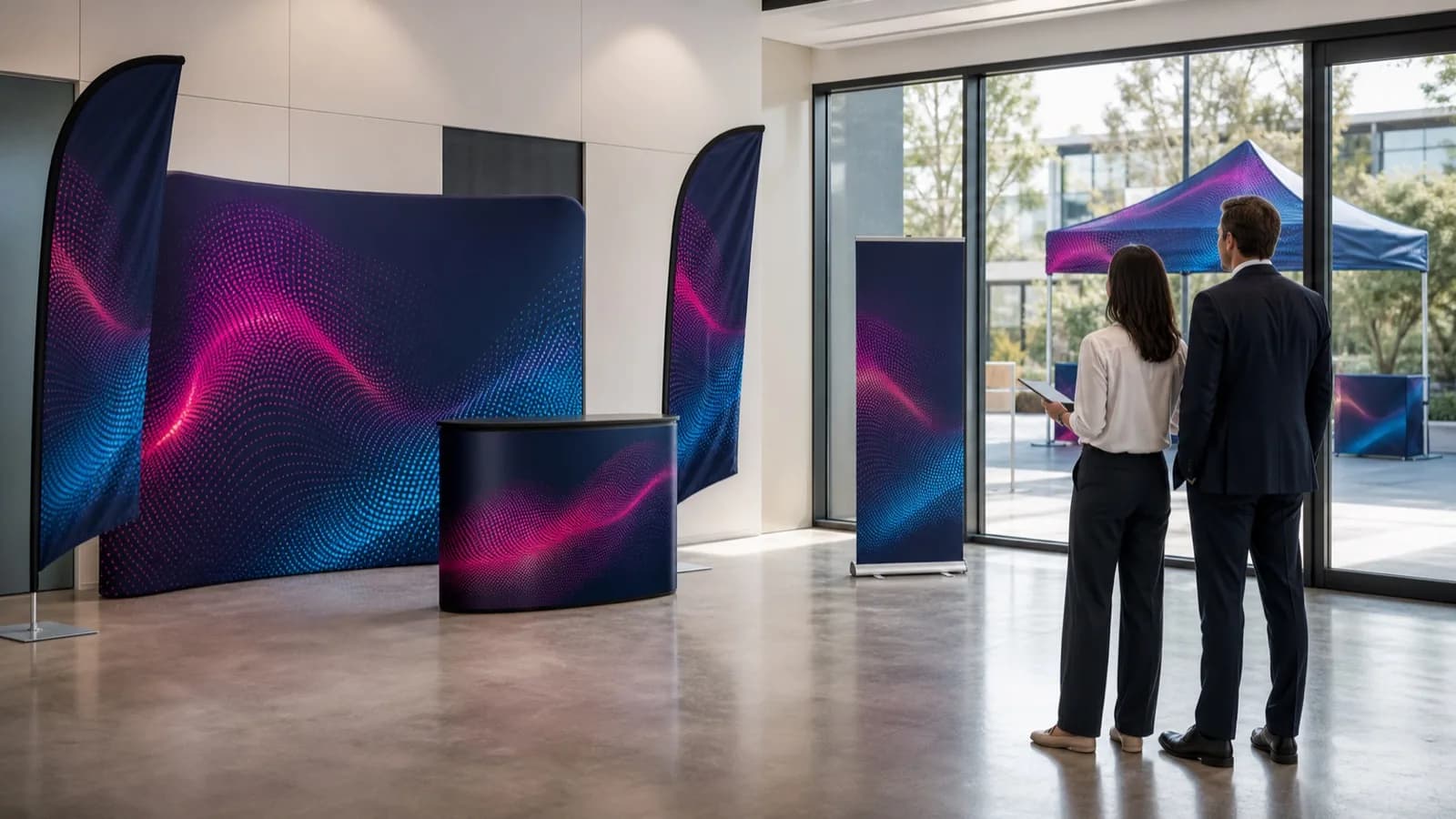
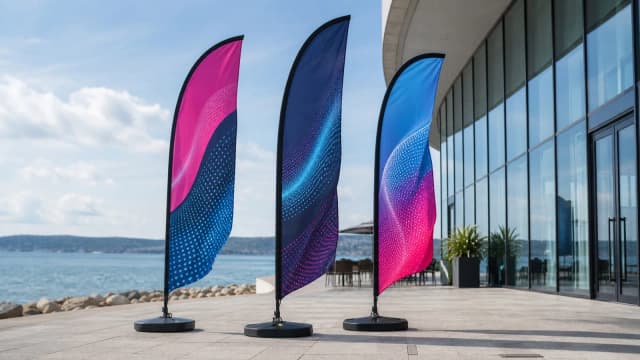
A large display wall defines the space and forms the main backdrop. Flags increase visibility and mark the entrance. The counter organises the conversation point, and a roll-up can present a single service, an instruction or a benefit. A tent combines shelter with marking out the outdoor area.
Once the roles are clear, it is easier to limit the amount of text. The set becomes clearer, and visitors do not have to compare several competing messages.
Build a visual system, not identical panels
Consistency does not mean copying one design onto every format. Keep the palette, typography, photographic style and a recurring motif, but adapt the composition to the shape of the display. A vertical flag needs a different crop from a wide display wall.
Prepare a shared preview of all the elements. It will help you spot too many logos, accidental colour differences and places where important content could be hidden by furniture or people.
Plan logistics as carefully as the artwork
A B2B set should be easy for a specific team to transport, count and set up. Label the bags and structures, prepare a packing list and a simple assembly sequence. Items used together are best packed so that nobody has to search for them in several places.
If the set travels between branches, include photo documentation and the details needed to order parts or new artwork. This reduces dependence on one person's memory.
Think about future events
The most economical system is not always the cheapest at the first purchase. Structures with interchangeable graphics can be used across many campaigns, and a modular set can be scaled down or expanded depending on the floor space. Neutral base elements combined with an up-to-date fabric cover make it easier to stay consistent over several seasons.
After each event, note which displays were really visible and how visitors moved around. These observations are the best input for optimising the next project.
- One communication hierarchy for the whole set
- A distinct role for each format
- A shared preview before production
- A clear packing and assembly system
- Structures designed for changing graphics
Create a simple brand specification
For the whole set, agree on one production palette, core typefaces, a minimum logo size and rules for using photos. Note which elements are fixed and which change between campaigns. Such a document can be a single page, but it should be shared with all designers and branches.
A colour can look different on fabric, vinyl and backlit graphics, even with the same value in the file. For important brand colours, compare samples on the final materials and agree the tolerance before the whole set goes into production.
The most common mistakes in B2B sets
The first mistake is repeating the entire offer on every display. The result is visual noise, and visitors do not know where to start. The second is ordering systems without a shared transport plan. Even consistent artwork will not help if part of the set does not fit in the car or needs an extra crew.
A lack of versioning is another problem. When several branches order artwork separately, old logos, different slogans and outdated details quickly appear. A central file library and a version number on the preview make control easier.
- One main promise for the whole display
- A separate message based on each display's role
- Joint approval of colours and logo size
- A packing list and a named owner of the set
- Version number and artwork approval date
Example: one set for three event formats
The core could be a modular display wall, two flags, a counter and a roll-up. For a small meeting, take the roll-up and counter; for a conference, the wall and counter; and for a large trade fair, the full set. A shared visual structure keeps the brand recognisable despite the change in scale.
Before buying, write down three real scenarios and assign the elements, number of people and means of transport to each. If a display has no clear role in any scenario, you probably do not need it.



Comments
Loading comments…