



Author: Vitasystem team · Technical review: Large-format production department
Updated: 2026-07-26
What is SEG artwork?
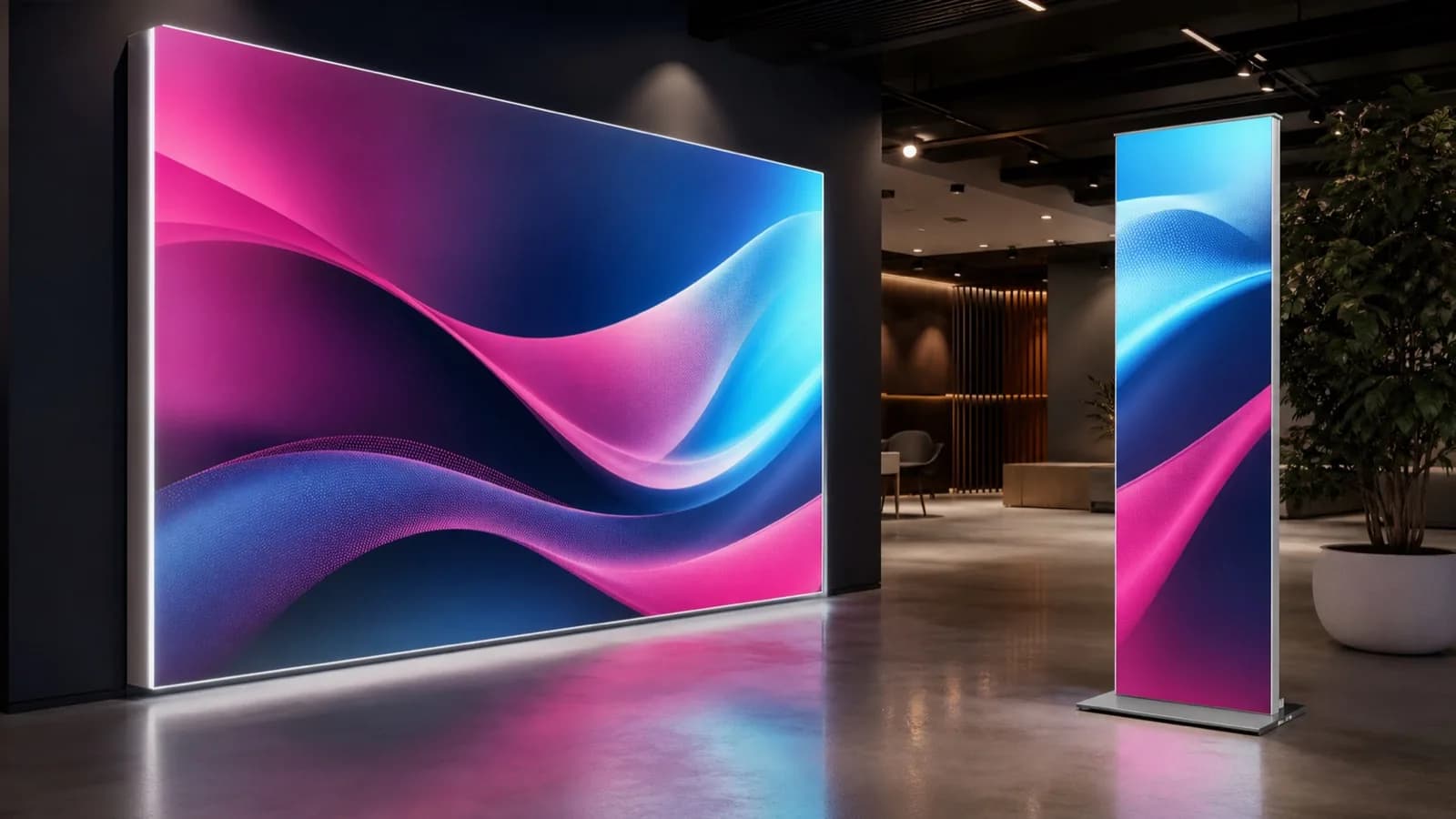
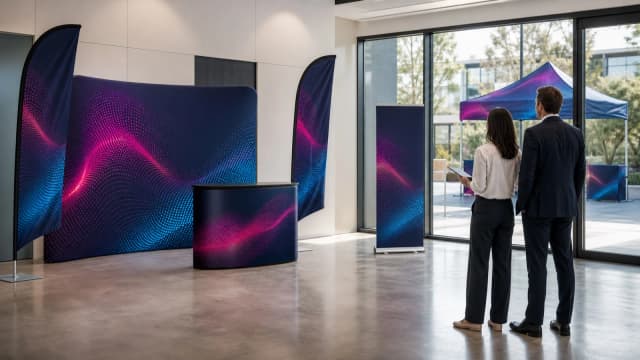
SEG is fabric artwork finished with a silicone edge that you slide into the frame profile. Once fitted, the fabric is evenly tensioned and the edges of the structure remain discreet. The solution works well in showrooms, shops, reception areas, at trade fairs and in modern offices.
The frame can be unlit or fitted with LED modules. In both cases, changing a campaign usually just means ordering new fabric, without replacing the whole structure.
When does backlighting give a real advantage?
Light helps separate your message from the visual noise of an exhibition hall or shopping centre. It is particularly effective in darker interiors, for premium displays and wherever the artwork needs to work for many hours regardless of the ambient lighting.
Not every space needs maximum brightness. What matters is evenness, colour temperature and the absence of visible light spots. A well-chosen system showcases the design, not the technology itself.
Designing artwork for a lightbox
Backlit artwork can reveal subtle tonal transitions, imperfections in a photo and differences in colour density. Use images of suitable quality and assess the design with the light shining through the fabric in mind. Very dark areas may need different preparation from bright, photographic compositions.
Keep the most important content away from the edge that slides into the profile. Before production, it is worth reviewing the visualisation and, for critical colours, a sample on the final material.
Wall-mounted, free-standing or modular?
A wall-mounted frame makes use of an existing surface and creates the effect of an elegant picture. A free-standing system can divide a space or work at trade fairs. Modular constructions let you build larger walls, corners and stands, but they require the installation and power supply to be planned in advance.
Check the profile depth, how the cables are routed and the service access. In public spaces, cabling should not create obstacles or become a random part of the display.
Cost over several campaigns
A lightbox frame is a bigger investment than a simple display, but if you change your messaging regularly, the cost is spread across many uses. The structure stays and you replace the fabric artwork. That is why it pays to choose a format that suits not just one campaign, but also the intended space and future campaigns.
- Define the location and lighting conditions
- Plan a safe power supply
- Check whether you can replace just the artwork
- Choose a system with available parts and servicing
Technical specifications matter more than maximum brightness
Ask about the evenness of the backlighting, the colour temperature, power consumption, power supply certification, cooling and access to the LED modules. In a large frame, the profile depth and the distance between the light source and the fabric also matter. A structure that is too shallow can reveal light spots.
For a portable system, check the number of packages, corner protection and how the modules connect. For a permanent installation, servicing, cable routing and the ability to change the artwork without dismantling the whole frame will be more important.
Design and buying mistakes
Do not assume that a file prepared for ordinary fabric will look the same when backlit. Light changes how blacks, tonal transitions and saturation are perceived. For critical brand colours, order a test print on the final material.
The second mistake is leaving the power supply out of the stand plan. A cable running across a walkway looks makeshift and can be a hazard. The power point and cable covers should be on the floor plan before you order the system.
- Compare evenness, not just light output
- Set one colour temperature for the whole display
- Plan servicing and module replacement
- Test the artwork on the final fabric
Example: a reception area with a campaign that changes every quarter
A permanent LED frame can remain part of the interior for several years, while the fabric changes with each campaign. It is worth matching the format to the architecture of the wall and the typical proportions of future designs, not just to the first creative.
After removal, store each graphic clean, dry and labelled. If the campaign is going to return, proper packing limits creasing and shortens the next installation.



Comments
Loading comments…